Caspio, Inc. is an American software company providing a low-code platform for building cloud-based business applications. Founded in 2000 by Frank Zamani, the company is headquartered in Sunnyvale, California, with operations in Poland, the Philippines, and Spain. Caspio’s platform allows organizations to create online database applications and workflow tools without extensive coding. == History == Caspio was founded by Frank Zamani in 2000. The company initially focused on simplifying custom cloud applications and reducing development time and cost as compared to traditional software development. Caspio released the first version of its platform, Caspio Bridge, in 2001. In 2014, Caspio released a HIPAA-Compliant Edition of its low-code application development platform. Caspio also released an EU General Data Protection Regulation (GDPR) Compliance Edition of its low-code application development platform in 2016. Caspio's second European Software Development Center opened in Kraków, Poland in 2017. In 2019, Forrester Research listed Caspio and three other platforms in its highest of four ranked tiers of twelve low-code platforms for business developers based on rankings of offerings and strategy at that time. Caspio also opened data centers in Montreal, Canada and India in 2020.
Comparison gallery of image scaling algorithms
This gallery shows the results of numerous image scaling algorithms. == Scaling methods == An image size can be changed in several ways. Consider resizing a 160x160 pixel photo to the following 40x40 pixel thumbnail and then scaling the thumbnail to a 160x160 pixel image. Also consider doubling the size of the following image containing text. == Examples of enlarged images == Below are examples of various images enlarged 4x using each scaling algorithm.
Personality computing
Personality computing is a research field related to artificial intelligence and personality psychology that studies personality by means of computational techniques from different sources, including text, multimedia, and social networks. == Overview == Personality computing addresses three main problems involving personality: automatic personality recognition, perception, and synthesis. Automatic personality recognition is the inference of the personality type of target individuals from their digital footprint. Automatic personality perception is the inference of the personality attributed by an observer to a target individual based on some observable behavior. Automatic personality synthesis is the generation of the style or behaviour of artificial personalities in Avatars and virtual agents. Self-assessed personality tests or observer ratings are always exploited as the ground truth for testing and validating the performance of artificial intelligence algorithms for the automatic prediction of personality types. There is a wide variety of personality tests, such as the Myers Briggs Type Indicator (MBTI) or the MMPI, but the most used are tests based on the Five Factor Model such as the Revised NEO Personality Inventory. Personality computing can be considered as an extension or complement of Affective computing, where the former focuses on personality traits and the latter on affective states. A further extension of the two fields is Character Computing which combines various character states and traits including but not limited to personality and affect. == History == Personality computing began around 2005 with the pioneering research in personality recognition by Shlomo Argamon and later by François Mairesse. These works showed that personality traits could be inferred with reasonable accuracy from text, such as blogs, self-presentations, and email addresses. In 2008, the concept of "portable personality" for the distributed management of personality profiles has been developed. A few years later, research began in personality recognition and perception from multimodal and social signals, such as recorded meetings and voice calls. In the 2010s, the research focused mainly on personality recognition and perception from social media, helped by the first workshops organized by Fabio Celli. In particular personality was extracted from Facebook, Twitter and Instagram. In the same years, automatic personality synthesis helped improve the coherence of simulated behavior in virtual agents. Scientific works by Michal Kosinski demonstrated the validity of Personality Computing from different digital footprints, in particular from user preferences such as Facebook page likes, showed that machines can recognize personality better than humans and raised a warning against Cambridge Analytica and misuse of this kind of technology. == Applications == Personality computing techniques, in particular personality recognition and perception, have applications in Social media marketing, where they can help reducing the cost of advertising campaigns through psychological targeting.
Curse of dimensionality
The curse of dimensionality refers to various phenomena that arise when analyzing and organizing data in high-dimensional spaces that do not occur in low-dimensional settings such as the three-dimensional physical space of everyday experience. The expression was coined by Richard E. Bellman when considering problems in dynamic programming. The curse generally refers to issues that arise when the number of datapoints is small (in a suitably defined sense) relative to the intrinsic dimension of the data. Dimensionally cursed phenomena occur in domains such as numerical analysis, sampling, combinatorics, machine learning, data mining and databases. The common theme of these problems is that when the dimensionality increases, the volume of the space increases so fast that the available data becomes sparse. In order to obtain a reliable result, the amount of data needed often grows exponentially with the dimensionality. Also, organizing and searching data often relies on detecting areas where objects form groups with similar properties; in high dimensional data, however, all objects appear to be sparse and dissimilar in many ways, which prevents common data organization strategies from being efficient. == Domains == === Combinatorics === In some problems, each variable can take one of several discrete values, or the range of possible values is divided to give a finite number of possibilities. Taking the variables together, a huge number of combinations of values must be considered. This effect is also known as the combinatorial explosion. Even in the simplest case of d {\displaystyle d} binary variables, the number of possible combinations already is 2 d {\displaystyle 2^{d}} , exponential in the dimensionality. Naively, each additional dimension doubles the effort needed to try all combinations. === Sampling === There is an exponential increase in volume associated with adding extra dimensions to a mathematical space. For example, 102 = 100 evenly spaced sample points suffice to sample a unit interval (try to visualize a "1-dimensional" cube, i.e. a line) with no more than 10−2 = 0.01 distance between points; an equivalent sampling of a 10-dimensional unit hypercube with a lattice that has a spacing of 10−2 = 0.01 between adjacent points would require 1020 = [(102)10] sample points. In general, with a spacing distance of 10−n the 10-dimensional hypercube appears to be a factor of 10n(10−1) = [(10n)10/(10n)] "larger" than the 1-dimensional hypercube, which is the unit interval. In the above example n = 2: when using a sampling distance of 0.01 the 10-dimensional hypercube appears to be 1018 "larger" than the unit interval. This effect is a combination of the combinatorics problems above and the distance function problems explained below. === Optimization === When solving dynamic optimization problems by numerical backward induction, the objective function must be computed for each combination of values. This is a significant obstacle when the dimension of the "state variable" is large. === Machine learning === In machine learning problems that involve learning a "state-of-nature" from a finite number of data samples in a high-dimensional feature space with each feature having a range of possible values, typically an enormous amount of training data is required to ensure that there are several samples with each combination of values. In an abstract sense, as the number of features or dimensions grows, the amount of data we need to generalize accurately grows exponentially. A typical rule of thumb is that there should be at least 5 training examples for each dimension in the representation. In machine learning and insofar as predictive performance is concerned, the curse of dimensionality is used interchangeably with the peaking phenomenon, which is also known as Hughes phenomenon. This phenomenon states that with a fixed number of training samples, the average (expected) predictive power of a classifier or regressor first increases as the number of dimensions or features used is increased but beyond a certain dimensionality it starts deteriorating instead of improving steadily. Nevertheless, in the context of a simple classifier (e.g., linear discriminant analysis in the multivariate Gaussian model under the assumption of a common known covariance matrix), Zollanvari et al. showed both analytically and empirically that as long as the relative cumulative efficacy of an additional feature set (with respect to features that are already part of the classifier) is greater (or less) than the size of this additional feature set, the expected error of the classifier constructed using these additional features will be less (or greater) than the expected error of the classifier constructed without them. In other words, both the size of additional features and their (relative) cumulative discriminatory effect are important in observing a decrease or increase in the average predictive power. In metric learning, higher dimensions can sometimes allow a model to achieve better performance. After normalizing embeddings to the surface of a hypersphere, FaceNet achieves the best performance using 128 dimensions as opposed to 64, 256, or 512 dimensions in one ablation study. A loss function for unitary-invariant dissimilarity between word embeddings was found to be minimized in high dimensions. === Data mining === In data mining, the curse of dimensionality refers to a data set with too many features. Consider the first table, which depicts 200 individuals and 2000 genes (features) with a 1 or 0 denoting whether or not they have a genetic mutation in that gene. A data mining application to this data set may be finding the correlation between specific genetic mutations and creating a classification algorithm such as a decision tree to determine whether an individual has cancer or not. A common practice of data mining in this domain would be to create association rules between genetic mutations that lead to the development of cancers. To do this, one would have to loop through each genetic mutation of each individual and find other genetic mutations that occur over a desired threshold and create pairs. They would start with pairs of two, then three, then four until they result in an empty set of pairs. The complexity of this algorithm can lead to calculating all permutations of gene pairs for each individual or row. Given the formula for calculating the permutations of n items with a group size of r is: n ! ( n − r ) ! {\displaystyle {\frac {n!}{(n-r)!}}} , calculating the number of three pair permutations of any given individual would be 7988004000 different pairs of genes to evaluate for each individual. The number of pairs created will grow by an order of factorial as the size of the pairs increase. The growth is depicted in the permutation table (see right). As we can see from the permutation table above, one of the major problems data miners face regarding the curse of dimensionality is that the space of possible parameter values grows exponentially or factorially as the number of features in the data set grows. This problem critically affects both computational time and space when searching for associations or optimal features to consider. Another problem data miners may face when dealing with too many features is that the number of false predictions or classifications tends to increase as the number of features grows in the data set. In terms of the classification problem discussed above, keeping every data point could lead to a higher number of false positives and false negatives in the model. This may seem counterintuitive, but consider the genetic mutation table from above, depicting all genetic mutations for each individual. Each genetic mutation, whether they correlate with cancer or not, will have some input or weight in the model that guides the decision-making process of the algorithm. There may be mutations that are outliers or ones that dominate the overall distribution of genetic mutations when in fact they do not correlate with cancer. These features may be working against one's model, making it more difficult to obtain optimal results. This problem is up to the data miner to solve, and there is no universal solution. The first step any data miner should take is to explore the data, in an attempt to gain an understanding of how it can be used to solve the problem. One must first understand what the data means, and what they are trying to discover before they can decide if anything must be removed from the data set. Then they can create or use a feature selection or dimensionality reduction algorithm to remove samples or features from the data set if they deem it necessary. One example of such methods is the interquartile range method, used to remove outliers in a data set by calculating the standard deviation of a feature or occurrence. === Distance function === When a measure such as a Euclidean distance is defined using many coordinat
Actor-critic algorithm
The actor-critic algorithm (AC) is a family of reinforcement learning (RL) algorithms that combine policy-based RL algorithms such as policy gradient methods, and value-based RL algorithms such as value iteration, Q-learning, SARSA, and TD learning. An AC algorithm consists of two main components: an "actor" that determines which actions to take according to a policy function, and a "critic" that evaluates those actions according to a value function. Some AC algorithms are on-policy, some are off-policy. Some apply to either continuous or discrete action spaces. Some work in both cases. == Overview == The actor-critic methods can be understood as an improvement over pure policy gradient methods like REINFORCE via introducing a baseline. === Actor === The actor uses a policy function π ( a | s ) {\displaystyle \pi (a|s)} , while the critic estimates either the value function V ( s ) {\displaystyle V(s)} , the action-value Q-function Q ( s , a ) , {\displaystyle Q(s,a),} the advantage function A ( s , a ) {\displaystyle A(s,a)} , or any combination thereof. The actor is a parameterized function π θ {\displaystyle \pi _{\theta }} , where θ {\displaystyle \theta } are the parameters of the actor. The actor takes as argument the state of the environment s {\displaystyle s} and produces a probability distribution π θ ( ⋅ | s ) {\displaystyle \pi _{\theta }(\cdot |s)} . If the action space is discrete, then ∑ a π θ ( a | s ) = 1 {\displaystyle \sum _{a}\pi _{\theta }(a|s)=1} . If the action space is continuous, then ∫ a π θ ( a | s ) d a = 1 {\displaystyle \int _{a}\pi _{\theta }(a|s)da=1} . The goal of policy optimization is to improve the actor. That is, to find some θ {\displaystyle \theta } that maximizes the expected episodic reward J ( θ ) {\displaystyle J(\theta )} : J ( θ ) = E π θ [ ∑ t = 0 T γ t r t ] {\displaystyle J(\theta )=\mathbb {E} _{\pi _{\theta }}\left[\sum _{t=0}^{T}\gamma ^{t}r_{t}\right]} where γ {\displaystyle \gamma } is the discount factor, r t {\displaystyle r_{t}} is the reward at step t {\displaystyle t} , and T {\displaystyle T} is the time-horizon (which can be infinite). The goal of policy gradient method is to optimize J ( θ ) {\displaystyle J(\theta )} by gradient ascent on the policy gradient ∇ J ( θ ) {\displaystyle \nabla J(\theta )} . As detailed on the policy gradient method page, there are many unbiased estimators of the policy gradient: ∇ θ J ( θ ) = E π θ [ ∑ 0 ≤ j ≤ T ∇ θ ln π θ ( A j | S j ) ⋅ Ψ j | S 0 = s 0 ] {\displaystyle \nabla _{\theta }J(\theta )=\mathbb {E} _{\pi _{\theta }}\left[\sum _{0\leq j\leq T}\nabla _{\theta }\ln \pi _{\theta }(A_{j}|S_{j})\cdot \Psi _{j}{\Big |}S_{0}=s_{0}\right]} where Ψ j {\textstyle \Psi _{j}} is a linear sum of the following: ∑ 0 ≤ i ≤ T ( γ i R i ) {\textstyle \sum _{0\leq i\leq T}(\gamma ^{i}R_{i})} . γ j ∑ j ≤ i ≤ T ( γ i − j R i ) {\textstyle \gamma ^{j}\sum _{j\leq i\leq T}(\gamma ^{i-j}R_{i})} : the REINFORCE algorithm. γ j ∑ j ≤ i ≤ T ( γ i − j R i ) − b ( S j ) {\textstyle \gamma ^{j}\sum _{j\leq i\leq T}(\gamma ^{i-j}R_{i})-b(S_{j})} : the REINFORCE with baseline algorithm. Here b {\displaystyle b} is an arbitrary function. γ j ( R j + γ V π θ ( S j + 1 ) − V π θ ( S j ) ) {\textstyle \gamma ^{j}\left(R_{j}+\gamma V^{\pi _{\theta }}(S_{j+1})-V^{\pi _{\theta }}(S_{j})\right)} : TD(1) learning. γ j Q π θ ( S j , A j ) {\textstyle \gamma ^{j}Q^{\pi _{\theta }}(S_{j},A_{j})} . γ j A π θ ( S j , A j ) {\textstyle \gamma ^{j}A^{\pi _{\theta }}(S_{j},A_{j})} : Advantage Actor-Critic (A2C). γ j ( R j + γ R j + 1 + γ 2 V π θ ( S j + 2 ) − V π θ ( S j ) ) {\textstyle \gamma ^{j}\left(R_{j}+\gamma R_{j+1}+\gamma ^{2}V^{\pi _{\theta }}(S_{j+2})-V^{\pi _{\theta }}(S_{j})\right)} : TD(2) learning. γ j ( ∑ k = 0 n − 1 γ k R j + k + γ n V π θ ( S j + n ) − V π θ ( S j ) ) {\textstyle \gamma ^{j}\left(\sum _{k=0}^{n-1}\gamma ^{k}R_{j+k}+\gamma ^{n}V^{\pi _{\theta }}(S_{j+n})-V^{\pi _{\theta }}(S_{j})\right)} : TD(n) learning. γ j ∑ n = 1 ∞ λ n − 1 1 − λ ⋅ ( ∑ k = 0 n − 1 γ k R j + k + γ n V π θ ( S j + n ) − V π θ ( S j ) ) {\textstyle \gamma ^{j}\sum _{n=1}^{\infty }{\frac {\lambda ^{n-1}}{1-\lambda }}\cdot \left(\sum _{k=0}^{n-1}\gamma ^{k}R_{j+k}+\gamma ^{n}V^{\pi _{\theta }}(S_{j+n})-V^{\pi _{\theta }}(S_{j})\right)} : TD(λ) learning, also known as GAE (generalized advantage estimate). This is obtained by an exponentially decaying sum of the TD(n) learning terms. === Critic === In the unbiased estimators given above, certain functions such as V π θ , Q π θ , A π θ {\displaystyle V^{\pi _{\theta }},Q^{\pi _{\theta }},A^{\pi _{\theta }}} appear. These are approximated by the critic. Since these functions all depend on the actor, the critic must learn alongside the actor. The critic is learned by value-based RL algorithms. For example, if the critic is estimating the state-value function V π θ ( s ) {\displaystyle V^{\pi _{\theta }}(s)} , then it can be learned by any value function approximation method. Let the critic be a function approximator V ϕ ( s ) {\displaystyle V_{\phi }(s)} with parameters ϕ {\displaystyle \phi } . The simplest example is TD(1) learning, which trains the critic to minimize the TD(1) error: δ i = R i + γ V ϕ ( S i + 1 ) − V ϕ ( S i ) {\displaystyle \delta _{i}=R_{i}+\gamma V_{\phi }(S_{i+1})-V_{\phi }(S_{i})} The critic parameters are updated by gradient descent on the squared TD error: ϕ ← ϕ − α ∇ ϕ ( δ i ) 2 = ϕ + α δ i ∇ ϕ V ϕ ( S i ) {\displaystyle \phi \leftarrow \phi -\alpha \nabla _{\phi }(\delta _{i})^{2}=\phi +\alpha \delta _{i}\nabla _{\phi }V_{\phi }(S_{i})} where α {\displaystyle \alpha } is the learning rate. Note that the gradient is taken with respect to the ϕ {\displaystyle \phi } in V ϕ ( S i ) {\displaystyle V_{\phi }(S_{i})} only, since the ϕ {\displaystyle \phi } in γ V ϕ ( S i + 1 ) {\displaystyle \gamma V_{\phi }(S_{i+1})} constitutes a moving target, and the gradient is not taken with respect to that. This is a common source of error in implementations that use automatic differentiation, and requires "stopping the gradient" at that point. Similarly, if the critic is estimating the action-value function Q π θ {\displaystyle Q^{\pi _{\theta }}} , then it can be learned by Q-learning or SARSA. In SARSA, the critic maintains an estimate of the Q-function, parameterized by ϕ {\displaystyle \phi } , denoted as Q ϕ ( s , a ) {\displaystyle Q_{\phi }(s,a)} . The temporal difference error is then calculated as δ i = R i + γ Q θ ( S i + 1 , A i + 1 ) − Q θ ( S i , A i ) {\displaystyle \delta _{i}=R_{i}+\gamma Q_{\theta }(S_{i+1},A_{i+1})-Q_{\theta }(S_{i},A_{i})} . The critic is then updated by θ ← θ + α δ i ∇ θ Q θ ( S i , A i ) {\displaystyle \theta \leftarrow \theta +\alpha \delta _{i}\nabla _{\theta }Q_{\theta }(S_{i},A_{i})} The advantage critic can be trained by training both a Q-function Q ϕ ( s , a ) {\displaystyle Q_{\phi }(s,a)} and a state-value function V ϕ ( s ) {\displaystyle V_{\phi }(s)} , then let A ϕ ( s , a ) = Q ϕ ( s , a ) − V ϕ ( s ) {\displaystyle A_{\phi }(s,a)=Q_{\phi }(s,a)-V_{\phi }(s)} . Although, it is more common to train just a state-value function V ϕ ( s ) {\displaystyle V_{\phi }(s)} , then estimate the advantage by A ϕ ( S i , A i ) ≈ ∑ j ∈ 0 : n − 1 γ j R i + j + γ n V ϕ ( S i + n ) − V ϕ ( S i ) {\displaystyle A_{\phi }(S_{i},A_{i})\approx \sum _{j\in 0:n-1}\gamma ^{j}R_{i+j}+\gamma ^{n}V_{\phi }(S_{i+n})-V_{\phi }(S_{i})} Here, n {\displaystyle n} is a positive integer. The higher n {\displaystyle n} is, the more lower is the bias in the advantage estimation, but at the price of higher variance. The Generalized Advantage Estimation (GAE) introduces a hyperparameter λ {\displaystyle \lambda } that smoothly interpolates between Monte Carlo returns ( λ = 1 {\displaystyle \lambda =1} , high variance, no bias) and 1-step TD learning ( λ = 0 {\displaystyle \lambda =0} , low variance, high bias). This hyperparameter can be adjusted to pick the optimal bias-variance trade-off in advantage estimation. It uses an exponentially decaying average of n-step returns with λ {\displaystyle \lambda } being the decay strength. == Variants == Asynchronous Advantage Actor-Critic (A3C): Parallel and asynchronous version of A2C. Soft Actor-Critic (SAC): Incorporates entropy maximization for improved exploration. Deep Deterministic Policy Gradient (DDPG): Specialized for continuous action spaces.
Gollum browser
Gollum browser is a discontinued web browser for accessing Wikipedia. Since 2017, Gollum is no longer accessible online. Gollum is designed to browse Wikipedia in an easier way than directly using the web browser. Links external to Wikipedia are opened in the user's regular browser. Gollum is opened from a regular browser and makes a window that puts the Wikipedia search bar on the toolbar. Gollum was created by Harald Hanek in 2005 using PHP and Ajax. According to one blogger, Gollum provides a way to bypass censorship of Wikipedia in China. == Languages == Though the website is available only in English and German, Gollum's GUI is available in more than 32 languages and can browse nearly 50 Wikipedia editions. === Gollum's GUI === === Browsable Wikipedia editions ===
Robot learning
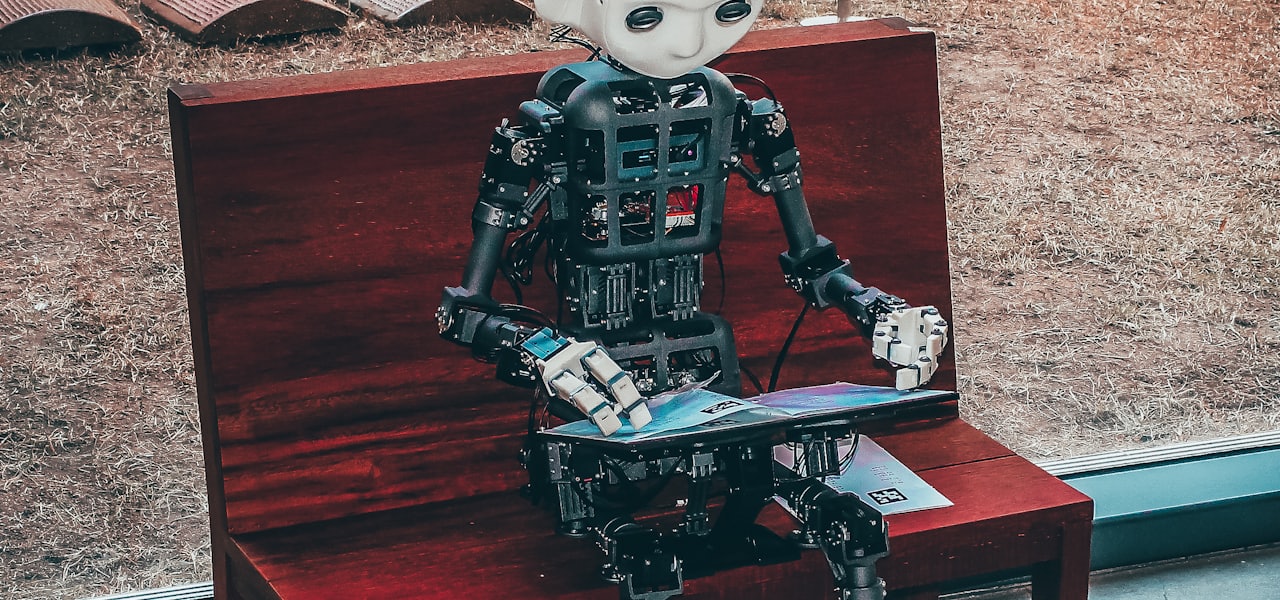
Robot learning is a research field at the intersection of machine learning and robotics. It studies techniques allowing a robot to acquire novel skills or adapt to its environment through learning algorithms. The embodiment of the robot, situated in a physical embedding, provides at the same time specific difficulties (e.g. high-dimensionality, real time constraints for collecting data and learning) and opportunities for guiding the learning process (e.g. sensorimotor synergies, motor primitives). Example of skills that are targeted by learning algorithms include sensorimotor skills such as locomotion, grasping, active object categorization, as well as interactive skills such as joint manipulation of an object with a human peer, and linguistic skills such as the grounded and situated meaning of human language. Learning can happen either through autonomous self-exploration or through guidance from a human teacher, like for example in robot learning by imitation. Robot learning can be closely related to adaptive control, reinforcement learning as well as developmental robotics which considers the problem of autonomous lifelong acquisition of repertoires of skills. While machine learning is frequently used by computer vision algorithms employed in the context of robotics, these applications are usually not referred to as "robot learning". == Imitation learning == Many research groups are developing techniques where robots learn by imitating. This includes various techniques for learning from demonstration (sometimes also referred to as "programming by demonstration") and observational learning. == Sharing learned skills and knowledge == In Tellex's "Million Object Challenge", the goal is robots that learn how to spot and handle simple items and upload their data to the cloud to allow other robots to analyze and use the information. RoboBrain is a knowledge engine for robots which can be freely accessed by any device wishing to carry out a task. The database gathers new information about tasks as robots perform them, by searching the Internet, interpreting natural language text, images, and videos, object recognition as well as interaction. The project is led by Ashutosh Saxena at Stanford University. RoboEarth is a project that has been described as a "World Wide Web for robots" − it is a network and database repository where robots can share information and learn from each other and a cloud for outsourcing heavy computation tasks. The project brings together researchers from five major universities in Germany, the Netherlands and Spain and is backed by the European Union. Google Research, DeepMind, and Google X have decided to allow their robots share their experiences. == Vision-language-action model == Research groups and companies are developing vision-language-action models, foundation models that allow robotic control through the combination of vision and language. Google DeepMind, Figure AI and Hugging Face are actively working on that.